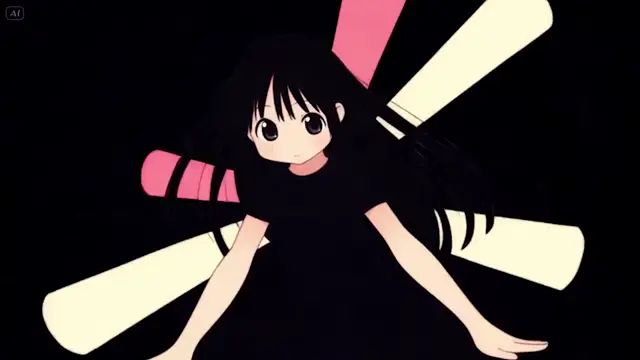
Surreal Anime Opening with Transforming Girl Motifs
Seedance 2 video prompt by shiyou/ココモヤ · original post
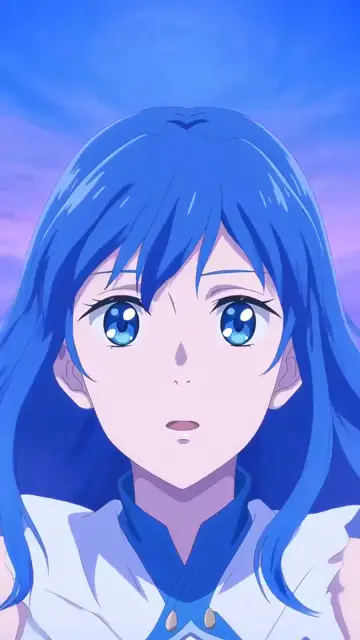
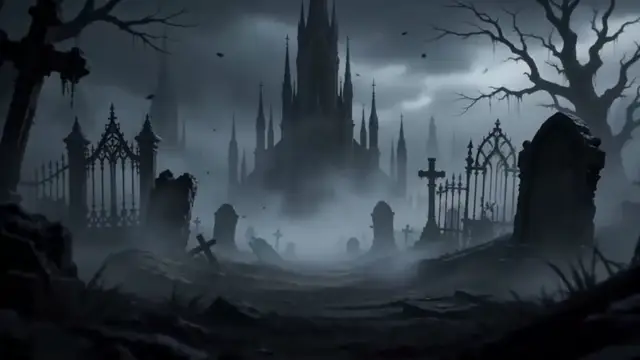
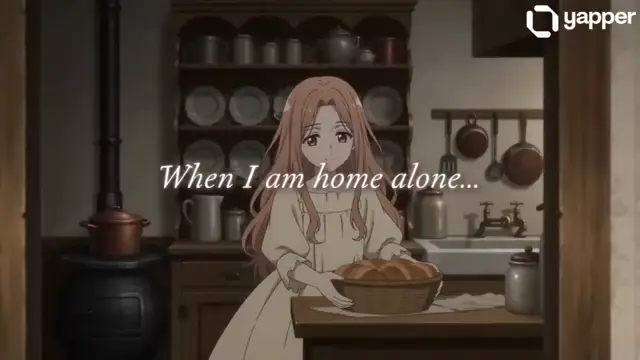
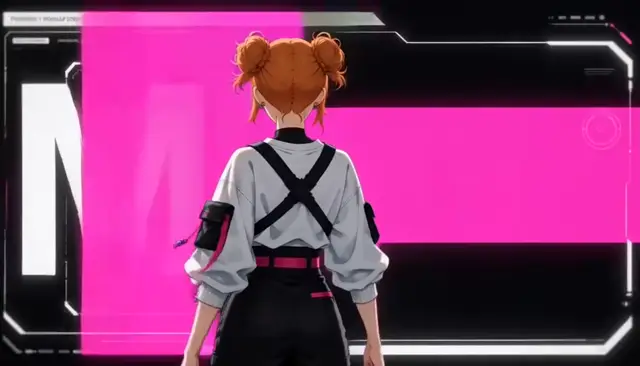
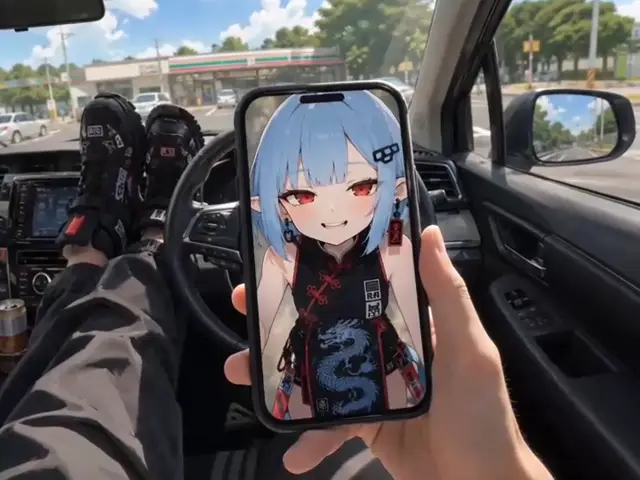
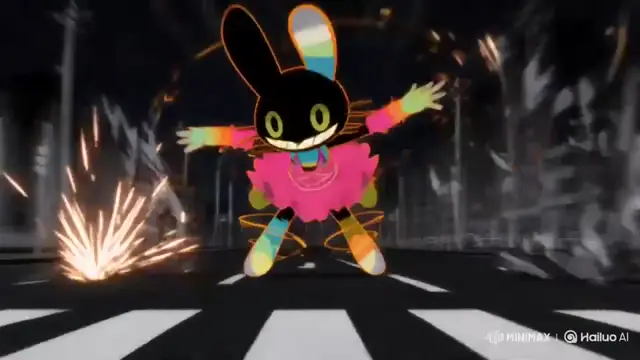
An avant-garde Japanese anime opening sequence featuring a cute girl moving through an endlessly transforming graphic world. Multiple versions of the same character overlap, split, and replace one another, rendered in flat 2D motion-graphics style with cel shading and limited symbolic motifs.
the prompt
An emotionally charged, avant-garde Japanese anime opening sequence with playful, surreal, graphic visual direction.

A cute anime girl moves through an endlessly transforming visual world. Multiple variations of the same girl appear, disappear, overlap, split apart, and replace one another, as if different versions of her personality and identity are competing inside the same opening sequence.

Full-color Japanese 2D animation, expressive hand-drawn character animation, clean cel shading, highly polished sakuga, 24fps.

[Core Visual Goal]

Prioritize flatness, graphic design, symbolic clarity, and emotional coherence.

The sequence should feel like a moving 2D graphic-design composition rather than a cinematic world.

Every visual element must relate directly to the girl, her emotions, her body, her memories, or the story's central symbolic ideas.

Do not introduce random decorative motifs or unrelated objects.

Do not use imagery just because it looks stylish.

Every repeated shape, symbol, prop, or visual metaphor must feel meaningfully connected to the same character and emotional theme.

[Overall Visual Direction]

Pop, surreal, stylish, cute, strange, slightly unsettling.

Very flat visual design.

Strong 2D composition over three-dimensional realism.

Large areas of flat color.

Minimal depth.

Minimal volumetric lighting.

Minimal environmental realism.

Graphic staging over cinematic staging.

The screen behaves like a moving poster, a motion-graphics illustration, or a transforming printed design.

Backgrounds are simplified into flat planes, cutout-like layers, symbolic spaces, and graphic fields.

When depth appears, it should be stylized and brief, used only for emphasis.

Flat images may suddenly bend, stretch, fold, rotate, or transform, but they should still feel fundamentally graphic and planar.

[Motif Control]

Use only motifs directly derived from the main character and her emotional world.

Allowed motifs should come from:
her eyes,
hair,
hands,
mouth,
silhouette,
clothing,
accessories,
shadows,
reflections,
mirrors,
frames,
ribbons,
simple body fragments,
personal symbolic objects,
and abstract shapes that clearly evolve from these elements.
Motifs may also come from a small number of central emotional symbols, but only if they are consistently repeated and clearly connected to the girl's identity.
Avoid unrelated decorative symbols such as random stars, random flowers, random animals, random cosmic imagery, random surreal props, or arbitrary visual clutter unless they are specifically established as core motifs.
Limit the motif vocabulary.
Reuse the same small symbolic set across the entire sequence.
The world should feel unified by recurring, meaningful visual symbols.
[Character Direction]
A cute anime girl with extremely expressive facial animation.
Playful, awkward, energetic, slightly surreal movements.
Sudden exaggerated poses.
Strong silhouette design.
Hair, clothes, hands, eyes, and facial expressions are treated as major visual building blocks.
Several different versions of the same girl coexist in the frame.
Characters duplicate into rows, grids, mirrored arrangements, circular formations, and rhythmic patterns.
One version of the girl seamlessly transforms into another through movement or shape change.
A turning head becomes another face.

Hair becomes ribbons or graphic lines.

Clothing becomes flat shape design.

A hand gesture becomes the next composition.

A silhouette becomes another version of the same character.

All transformations must remain character-centered.

[Flat Composition]

Extreme graphic compositions.

Centered portraits.

Perfect symmetry suddenly broken by asymmetry.

Extreme close-ups of eyes, mouths, fingers, shoes, hair, and accessories.

Characters placed unusually small inside large areas of negative space.

Clean silhouette readability.

Frames inside frames.

Split panels.

Layered paper-cutout compositions.

Collage-like transitions.

Sticker-like or printed-image behavior.

Strong use of graphic borders, framing devices, and controlled empty space.

Perspective distortion may appear, but mostly as a graphic device, not as realistic camera depth.

Favor frontal views, side profiles, top-down graphic arrangements, flattened fisheye-like distortion, and design-driven camera compositions.

Avoid overly immersive 3D cinematic space.

[Color Design]

Highly controlled but playful color palette.

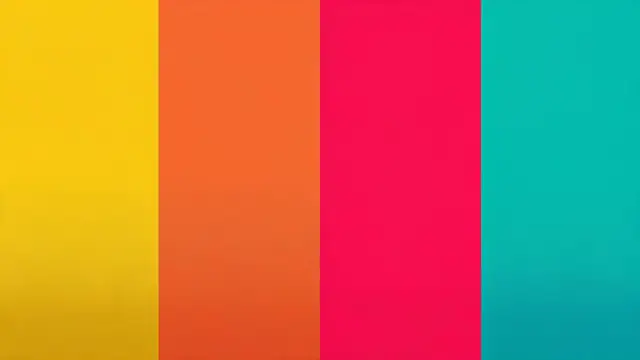
Bold pastel pink, red, cream, black, white, pale blue, yellow, and occasional accent colors.

Large areas of single flat color.

Sudden palette shifts between cuts.

Complementary contrast.

Characters occasionally reduced to two or three colors.

Bright cheerful colors contrasted with subtle emotional instability.

Avoid realistic lighting unless absolutely necessary.

Avoid heavy bloom, realistic HDR rendering, or dramatic cinematic illumination.

Light should support graphic readability, not realism.

[Editing and Transitions]

Rapid rhythmic editing synchronized with the music.

Cuts every 0.2–0.8 seconds during energetic sections, occasionally interrupted by strangely long still shots for contrast.

Extremely inventive visual transitions.

Match cuts.

Graphic match cuts.

Silhouette match cuts.

Shape transitions.

Smash cuts.

Blink transitions.

Whip-like graphic transitions.

Frame-within-frame transitions.

A face becomes a flat icon.

An icon becomes an eye.

An eye becomes a circle.

A circle becomes a button.

A button becomes a pupil.

One drawing continuously transforms into another.

Seamless metamorphosis across the entire screen.

Transitions should feel conceptually linked, not random.

[Motion Design]

Fast motion followed by sudden stillness.

Limited-animation sections contrasted with bursts of fluid hand-drawn motion.

Characters sliding across flat backgrounds.

Repeated motion loops.

Synchronized choreography.

Brief bullet-time moments used sparingly.

Frame skipping used stylistically.

Occasional animation on twos or threes contrasted with more fluid motion.

Movement should feel designed and graphic rather than physically realistic.

[Experimental Elements]

Analog film grain.

Subtle digital noise.

Halftone patterns.

Misregistration.

Paper texture.

Printed texture.

Photocopied texture.

Handwritten marks.

Graphic icons flashing for only several frames.

Occasional black frames or single-color frames used as punctuation.

No generic cyberpunk glitch aesthetic.

Effects should feel handmade, printed, designed, and intentionally graphic.

[Background Direction]

Original abstract anime backgrounds rather than detailed realistic scenery.

Rooms, corridors, streets, skies, and interiors are reduced to simplified flat symbolic spaces.

Architectural elements can be reduced into lines, blocks, planes, cutouts, and repeated patterns.

Backgrounds may rotate, flatten, fold, stretch, or transform, but should remain visually simple and controlled.

Environmental detail appears only when emotionally meaningful.

Negative space is an active compositional tool.

Avoid busy backgrounds and unnecessary scenery.

[Key Directorial Techniques]

Dynamic graphic montage.

Visual repetition.

Character duplication.

Unexpected scale changes.

Symbolic imagery.

Playful visual misdirection.

Controlled color scripting.

Music-synchronized editing.

Cute imagery mixed with subtle psychological unease.

Planar composition over cinematic realism.

Restricted motif vocabulary.

Narrative-symbolic consistency.

[Production Concept]

An anime opening about identity, transformation, contradiction, and emotions that cannot be fully expressed through words.

Instead of explaining the character's inner world directly, visualize it through repetition, duplication, transformation, symbolic substitution, and recurring motifs derived from the character herself.

The sequence should feel charming and playful on the surface while quietly suggesting instability underneath.

Every shot should contain a deliberate visual idea.

Every visual idea should connect back to the same emotional world.

Avoid generic anime-MV imagery.

Avoid continuous cinematic realism.

Avoid excessive environmental detail.

Avoid unrelated visual symbols.

Avoid random spectacle.

Avoid adding motifs that do not clearly belong to the character or the story.

Prioritize flat graphic invention, character-centered symbolism, visual rhythm, meaningful transitions, and memorable 2D compositions.

The result should feel like an exceptionally ambitious experimental Japanese anime opening: flat, cute, strange, controlled, psychologically expressive, visually playful, and constantly transforming.
- model
- Seedance 2
- type
- video
- shape
- 16:9
- length
- 102 seconds
- shared
- August 14, 2026
- prompt
- 1,123 words
Made this? Fix the credit or remove it.